Young Animators: Bring Your Drawings to Life
About Course
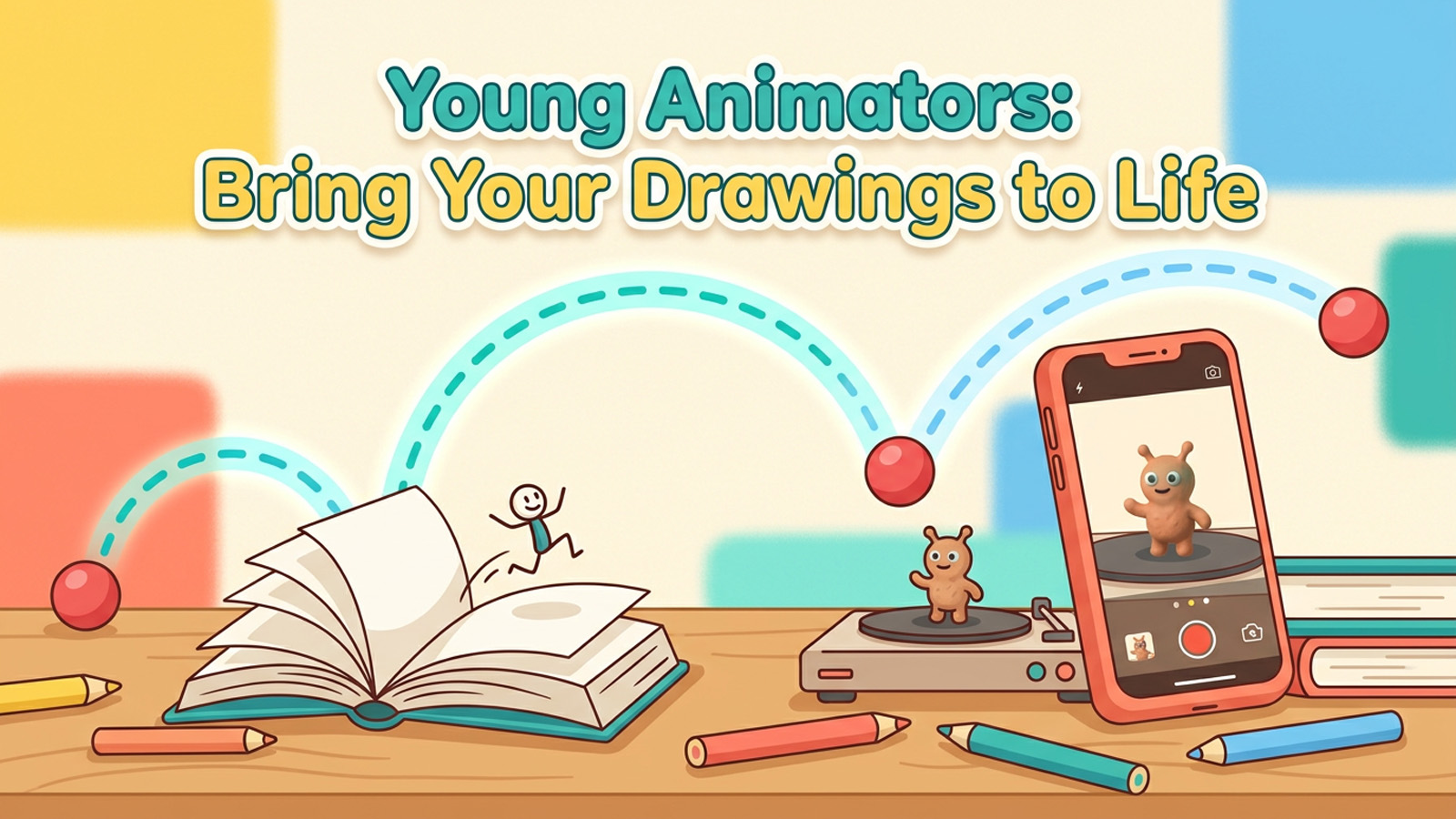
Have you ever wished your drawings could move, jump, wiggle, and come alive? In this hands-on course, you’ll learn exactly how animators turn still pictures into motion — and you’ll make your own animations from the very first module. No fancy equipment needed: just paper, a pencil, a phone, and your imagination.
We start with the oldest animation trick in the world (the flipbook) and discover the secret of why our eyes turn still pictures into movement. Then you’ll learn the real animation principles that the pros at big studios use every single day — squash and stretch, timing, anticipation, and easing — explained in a way that actually makes sense for a young animator. After that, we bring real objects to life with stop-motion using stuff from around your house, and finally we step into the world of free digital tools to make a walk cycle, add sound, and share your finished film.
Every module ends with a fun mini-project so you’re always making, not just reading. By the end, you’ll have a small collection of animations you created yourself — and the skills to keep making more. Grab your pencil. Let’s make your drawings move!
What you’ll learn
- Animate a bouncing ball with a believable arc, squash, and stretch
- Create your own flipbook from scratch using paper and a pencil
- Apply the core animation principles that professional studios use
- Build a complete stop-motion scene with household objects and a phone
- Plan and shoot animation frames with good lighting and a steady setup
- Animate a simple 2D walk cycle using free digital software
- Add sound effects and music to make your animations feel alive
- Export and share your finished animations with friends and family
Course Content
The Magic of Motion
-
Why Still Pictures Seem to Move
-
Make Your First Flipbook
-
Understanding Frames and Keyframes
-
Mini-Project: The Bouncing Ball
-
Module 1 Quiz: The Magic of Motion