Raising Emotionally Intelligent Children
About Course
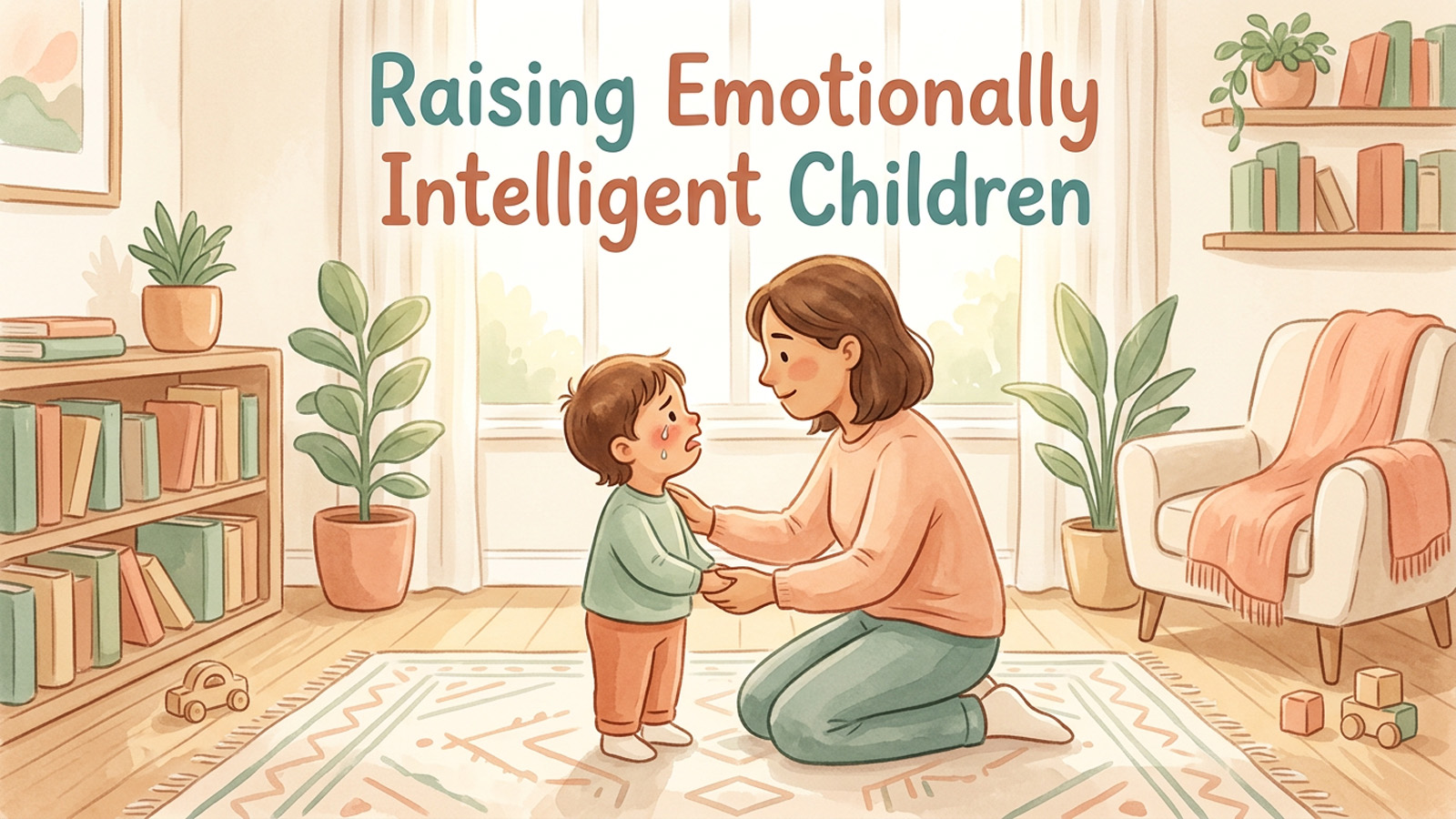
Every parent knows the moment: your child melts down over the wrong-colored cup, freezes with worry before school, or hits a sibling in a flash of frustration. In these moments it’s tempting to fix, distract, or shut the feeling down fast. But what if those very moments are your biggest chance to teach? Emotional intelligence — the ability to notice, name, understand, and manage feelings — is one of the strongest predictors of a child’s future friendships, school success, and lifelong wellbeing. The good news: it’s not a personality trait kids are born with or without. It’s a set of skills, and you are your child’s first and best teacher.
This course translates decades of research — emotion coaching, co-regulation, and the science of the developing brain — into warm, practical steps you can use today. You won’t find clinical jargon or impossible standards here. Instead you’ll get real scripts to say, simple tools to try, and a calm framework for the hardest parenting moments. Whether your child is a spirited three-year-old or a moody ten-year-old, you’ll learn how to stay steady when they can’t, accept their feelings while still holding firm limits, and help them build the emotional muscles that last a lifetime.
Across four modules you’ll move from understanding why feelings hijack a child’s brain, to coaching emotions in everyday life, to surviving and repairing after meltdowns, to growing genuine empathy and friendship skills — even in a screen-filled world. Each lesson is short, concrete, and full of phrases you can borrow word-for-word.
This is not about raising a child who never gets upset. It’s about raising one who knows what to do when they are. Bring your real parenting struggles, an open mind, and a willingness to practice — including a little patience with yourself. Let’s begin.
What you’ll learn
- Coach your child through big feelings using a calm, repeatable five-step method.
- Name emotions out loud so your child’s upset brain settles faster.
- Validate feelings genuinely without dismissing, fixing, or rushing them away.
- Set firm, kind limits on behavior while still accepting every emotion underneath it.
- Calm tantrums and meltdowns with co-regulation instead of punishment or bribery.
- Repair and reconnect after blow-ups so conflict actually builds trust.
- Build empathy, perspective-taking, and real friendship skills in your child.
- Model healthy emotions yourself and handle feelings in a screen-filled world.
Course Content
Understanding Emotions and Emotional Intelligence
-
What Emotional Intelligence Really Is
-
Why EQ Predicts a Child’s Wellbeing
-
How a Child’s Brain Handles Big Feelings
-
Your Emotions Are the First Lesson
-
Module 1 Quiz: Understanding Emotions and EQ